CNC machine tools are computer-controlled machines used to manufacture precision components through operations such as milling, turning, drilling, boring, threading and grinding.
CNC stands for Computer Numerical Control. These machines follow programmed instructions to control tool movements, machining sequences, spindle speeds and other operating parameters.
Common types of CNC machine tools include CNC milling machines, CNC lathes, vertical machining centres (VMCs), horizontal machining centres (HMCs), CNC drilling machines and CNC grinding machines.
However, machining performance does not depend on the CNC machine alone.
Every machining operation also requires suitable cutting tools, tool holders, collets and other precision tooling accessories.
For example, a CNC milling machine may use an ER collet holder and an end mill to remove material from a metal workpiece. The machine controls the process, the cutting tool removes material, and the tool-holding system secures the tool during machining.
Important distinction: CNC machine tools generally refer to complete machining equipment, while CNC tooling refers to the cutting tools, tool holders, clamping systems and accessories used with that equipment.
ACCU-FIX Precision Tools manufactures and supplies precision CNC tooling and accessories used in CNC machining applications. ACCU-FIX does not manufacture complete CNC machines.
This guide explains the types of CNC machine tools, their applications, the tooling used with them and how to choose suitable CNC tooling for precision manufacturing.
CNC Machine Tools at a Glance
CNC machine types, operations, applications and relevant tooling
CNC Machine Type
Main Operation
Common Applications
Relevant Tooling
CNC Milling Machine
Milling and profiling
Slots, pockets, complex surfaces
Collet holders, end-mill holders
CNC Lathe
Turning
Shafts, bushes, cylindrical components
Turret sleeves, jaws, centres
Vertical Machining Centre (VMC)
Multi-operation vertical machining
Dies, moulds, precision components
Tool holders, collets, pull studs
Horizontal Machining Centre (HMC)
Horizontal machining
Multi-sided industrial components
Compatible holders, collets, retention systems
CNC Drilling Machine
Hole-making operations
Drilled and threaded components
Drill holders, collets, tapping holders
CNC Grinding Machine
Abrasive finishing
Precision surfaces and components
Machine-specific grinding accessories
The correct tooling depends on the machine spindle interface, machining operation, cutting tool dimensions and required accuracy.
A CNC machining process generally starts with a digital component design.
The design is converted into machining instructions that tell the CNC machine how the cutting tool should move.
The machining program controls movement and cutting conditions, but successful machining also depends on the physical tooling setup. Before starting production, operators must verify cutting-tool compatibility, tool-holder selection, workholding, tool length, workpiece setup and relevant safety requirements.
During machining, the CNC system controls parameters such as:
Tool movement
Cutting direction
Spindle speed
Feed rate
Cutting depth
Tool changes
Machining sequence
The cutting tool removes material from the workpiece until the required geometry is achieved.
Types of CNC Machine Tools
Different CNC machines are designed for different machining operations.
1. CNC Milling Machines
CNC milling machines use rotating cutting tools to remove material from a stationary or controlled workpiece. Match the cutter and machine interface with compatible CNC tool holders.
Common milling operations include:
Face milling
Shoulder milling
Slot milling
Pocket milling
Profile milling
Contouring
Drilling
Thread milling
CNC milling is widely used for manufacturing components requiring complex geometries and accurate surfaces.
Common CNC Milling Tools
CNC milling operations can use:
End mills
Face mills
Ball nose cutters
Slot cutters
Indexable milling cutters
Chamfer cutters
The correct cutter depends on the workpiece material, machining strategy and required surface finish.
2. CNC Turning Machines
CNC turning machines rotate the workpiece while a cutting tool removes material.
Turning is commonly used for producing cylindrical components.
Typical operations include:
External turning
Internal turning
Facing
Grooving
Threading
Parting
Boring
Industries use CNC turning for components such as shafts, bushes, pins, connectors and other rotational parts.
3. CNC Machining Centers
CNC machining centers combine multiple machining operations into a single setup.
Depending on the machine configuration, they may perform:
Milling
Drilling
Tapping
Boring
Reaming
Contouring
Automatic tool-changing systems allow the machine to switch between different cutting tools during a machining cycle.
VMC – Vertical Machining Center
A Vertical Machining Center has a vertically oriented spindle.
VMC machines are widely used for:
Milling
Drilling
Tapping
Die and mould work
General component manufacturing
HMC – Horizontal Machining Center
A Horizontal Machining Center uses a horizontally oriented spindle.
HMCs can be suitable for high-production machining and components requiring machining from multiple sides.
4. CNC Drilling Machines
CNC drilling machines are designed to create accurate holes in components.
Common drilling operations include:
Drilling
Spot drilling
Counterboring
Countersinking
Reaming
Tapping
The correct drill geometry and cutting parameters depend on the material and hole requirements.
5. CNC Grinding Machines
CNC grinding machines use abrasive wheels to achieve precise dimensions and surface finishes.
Grinding is commonly used where very tight tolerances or fine surface finishes are required.
Applications include:
Tool manufacturing
Automotive components
Aerospace components
Precision engineering
Die and mould manufacturing
Which CNC Tooling Is Used with Different CNC Machines?
Different CNC machine tools require different types of accessories for cutting-tool clamping, workpiece support and machine compatibility.
For CNC milling machines and VMCs, commonly used tooling systems may include ER collet holders, hydraulic holders, shrink-fit holders, face-mill holders and suitable pull studs.
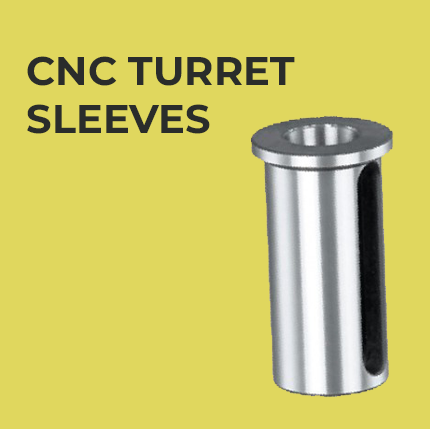
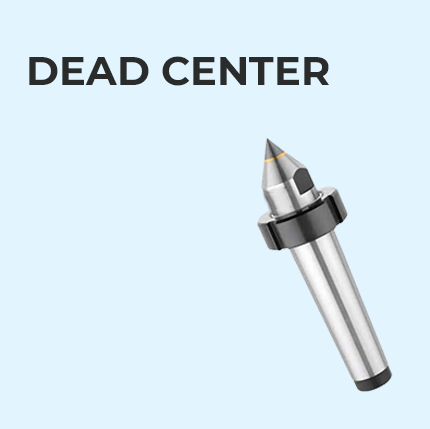
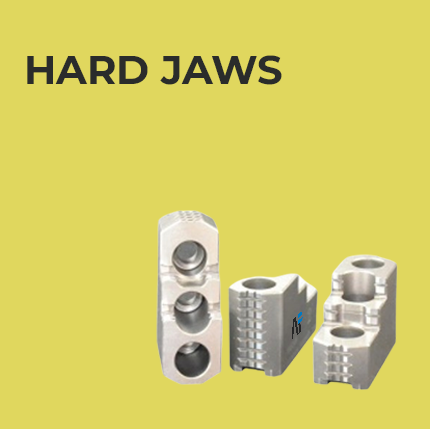
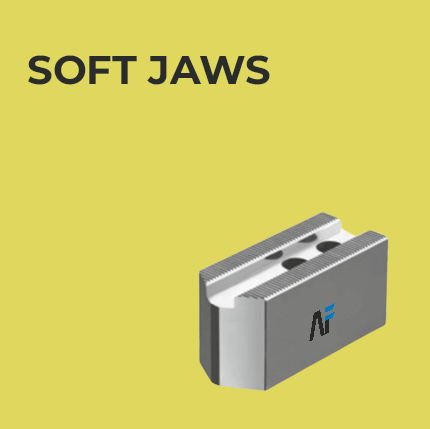
CNC turning machines may use compatible turret sleeves, chuck jaws, live centres and dead centres, depending on the machine configuration and operation.
Drilling and tapping applications may require suitable collets, tapping holders and quick-change tapping adapters.
Tool selection must always begin with the actual machine interface and machining application. A tool holder designed for one machine configuration should not be assumed compatible with another.
Common CNC Cutting Tools
Selecting the correct cutting tool is essential for machining performance.
End Mills
End mills are commonly used in CNC milling.
They can perform operations such as:
Slotting
Profiling
Pocketing
Contouring
Side milling
Different geometries and materials are available depending on the machining application.
Face Mills
Face milling produces flat surfaces using a suitable cutter. Compare face mill holders against the cutter connection and machine spindle interface.
They commonly use replaceable inserts and are available in different diameters and configurations.
Face mills are frequently used for:
Surface preparation
Rough machining
Finishing
High-productivity material removal
Drills
Drilling tools create holes in the workpiece.
Depending on the application, manufacturers may use:
Solid carbide drills
Indexable drills
Replaceable-tip drills
Center drills
Spot drills
Tool selection depends on factors such as hole diameter, depth, workpiece material and required tolerance.
Boring Tools
Boring tools enlarge and finish existing holes.
They are used when greater dimensional accuracy or surface quality is required.
Fine boring tools can be particularly useful for precision hole machining.
Turning Tools
Turning tools are used on CNC lathes and turning centers.
Common turning tools include:
External turning tools
Internal turning tools
Grooving tools
Threading tools
Parting tools
Replaceable carbide inserts are widely used for CNC turning operations.
Threading Tools
Threading tools are used to produce internal or external threads.
Depending on the operation, manufacturers may use:
Threading inserts
Thread mills
Taps
Threading holders
The right solution depends on thread type, size, material and production requirements.
CNC Tool Holders: Why Are They Important?
A cutting tool cannot perform consistently if it is not held correctly.
CNC tool holders create the connection between the machine spindle and the cutting tool.
Their job is to hold the cutting tool securely while maintaining the required accuracy and rigidity during machining.
Common tool holder systems include:
ER collet chucks
Hydraulic chucks
Shrink-fit holders
Milling chucks
End mill holders
Shell mill holders
Drill chucks
Tapping holders
Boring holders
The appropriate holder depends on the machine spindle, cutting tool and machining application.
CNC Tool Holder Types and Their Applications
CNC precision tooling families, applications and buyer specification details
A collet is a precision clamping component used to hold a cutting tool or workpiece.
ER collets are widely used in CNC machining because they can accommodate different tool diameters within their specified clamping ranges.
Common ER collet series include:
ER8
ER11
ER16
ER20
ER25
ER32
ER40
ER50
Collet accuracy and condition can influence tool runout and machining performance.
How to Select the Correct CNC Collet
Selecting an appropriate CNC collet requires more than matching the nominal diameter.
Before placing an order, verify:
The compatible collet series.
The actual cutting-tool shank diameter.
The manufacturer's specified gripping range.
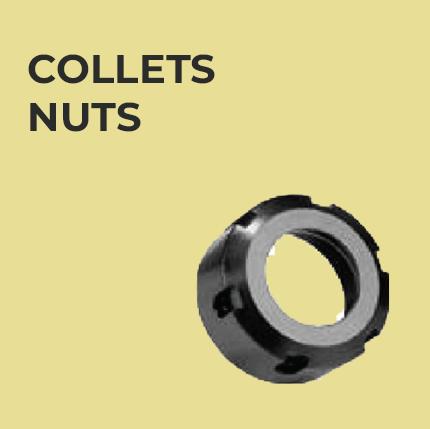
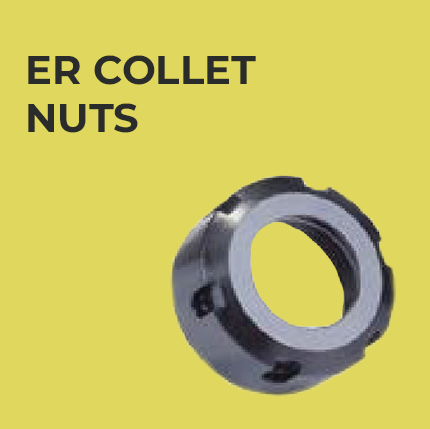
The tool holder and collet nut compatibility.
The required machining accuracy.
The operating conditions and application requirements.
Collets should be inspected for damage, deformation, contamination and wear. Using an incorrectly sized or damaged collet may affect clamping stability and machining performance.
For demanding applications, buyers should review the relevant product specifications and measurement conditions rather than assuming every collet provides the same runout performance.
CNC machine tools perform different functions depending on the manufacturing requirement.
Cutting
Material is removed from the workpiece using an appropriate cutting tool.
Milling
Rotating cutting tools produce surfaces, slots, pockets and complex profiles.
Turning
A rotating workpiece is machined using a stationary or controlled cutting tool.
Drilling
Holes are produced at programmed locations.
Boring
Existing holes are enlarged or finished to achieve required dimensions.
Threading
Internal or external threads are produced using appropriate tooling.
Grooving
Narrow grooves are machined into a workpiece.
Facing
Material is removed to produce a flat surface.
Finishing
Final machining passes are used to achieve the required dimensional accuracy and surface finish.
Applications of CNC Machine Tools
CNC machining is used across numerous industries.
Automotive
CNC tools are used for machining:
Engine components
Transmission parts
Shafts
Brackets
Housings
Precision components
Aerospace
Aerospace machining requires high levels of accuracy and process control.
Applications include structural components, housings and precision mechanical parts.
Die & Mould
CNC machining is widely used for:
Injection moulds
Dies
Mould cavities
Inserts
Precision profiles
General Engineering
Machine shops use CNC tools to manufacture a wide variety of custom and production components.
Medical
Precision CNC machining is used for selected medical components and manufacturing equipment where tight tolerances may be required.
Energy & Heavy Engineering
CNC machining is used to manufacture various components for industrial equipment, energy systems and heavy machinery.
Materials Machined Using CNC Tools
CNC tools can machine a wide range of materials, including:
Mild steel
Carbon steel
Stainless steel
Tool steel
Cast iron
Aluminium
Copper
Brass
Titanium
Nickel-based alloys
Engineering plastics
However, one cutting tool or insert is not suitable for every material.
Tool geometry, coating, cutting speed and feed should be selected according to the workpiece material and machining conditions.
How to Choose Compatible CNC Tooling
Choosing the correct tooling can affect productivity, tool life and component quality.
Consider the following factors.
Workpiece Material
The first consideration is the material being machined.
Machining aluminium requires different tooling considerations from machining hardened steel, stainless steel or cast iron.
Machining Operation
Determine whether you need:
Milling
Drilling
Turning
Boring
Grooving
Threading
Finishing
Select tooling specifically designed for that operation.
Machine Spindle
The tool holder must be compatible with your machine spindle.
Common interfaces can include:
BT
CAT
HSK
ISO
Other machine-specific systems
Always verify machine compatibility before selecting a holder.
Tool Diameter
Select the holder bore and collet clamping range according to the cutting tool's shank diameter—not its cutting diameter. Also confirm the required shank tolerance, insertion length and compatibility with the selected holder system. Follow the relevant product and machine instructions.
Required Accuracy
Precision machining applications may require tighter control of:
Runout
Balance
Rigidity
Tool projection
Clamping accuracy
Cutting Parameters
Consider:
Spindle speed
Feed rate
Depth of cut
Coolant
Tool overhang
These factors influence both tool selection and machining performance.
Why Tool Holder Accuracy Matters
Tool holders are sometimes treated as accessories, but they are an important part of the machining system.
Excessive runout or insufficient rigidity can contribute to:
Uneven tool wear
Poor surface finish
Reduced tool life
Vibration
Dimensional variation
The complete machining system should therefore be considered:
Improving only one component may not solve a machining problem if another part of the system is causing instability.
CNC Tool Maintenance Tips
Proper maintenance can help maintain machining consistency.
Clean Tool Holders
Remove chips, coolant residue and dirt from holders before installation.
Inspect Collets
Check collets for:
Wear
Damage
Contamination
Deformation
Keep Spindle Interfaces Clean
Contamination between the spindle and tool holder can affect seating and accuracy.
Use Correct Tightening Procedures
Follow the manufacturer's recommended tightening procedures and torque values.
Monitor Cutting Tool Wear
Replace worn cutting tools before they negatively affect component quality or cause unexpected failure.
Store Tooling Properly
Protect precision tooling from:
Corrosion
Impact
Dust
Moisture
CNC Machine Tools vs CNC Cutting Tools: What's the Difference?
These terms are sometimes used interchangeably, but they can describe different parts of the machining process.
A CNC machine tool commonly refers to CNC-controlled machining equipment such as a CNC milling machine, lathe or machining center.
A CNC cutting tool is the tool that physically removes material, such as an end mill, drill, milling cutter or turning insert.
A tool holder connects the cutting tool to the machine spindle.
For example:
CNC Machining Center → Tool Holder → ER Collet → End Mill → Workpiece
Each component plays a role in machining accuracy and performance.
CNC machine tools, cutting tools and tooling accessories comparison
Component
Purpose
Example
CNC Machine Tool
Controls machining movement and operations
VMC, CNC lathe
CNC Cutting Tool
Removes material from the workpiece
End mill, drill, turning insert
CNC Tool Holder
Connects and secures compatible cutting tooling
ER collet holder, hydraulic holder
CNC Collet
Clamps a compatible tool shank or workpiece
ER collet
Supporting CNC Accessory
Supports retention, clamping or workholding
Pull stud, jaw, turret sleeve
Why Does the Complete Tooling System Matter?
Machine performance depends on more than CNC programming. Tooling condition, assembly, spindle compatibility and cutting parameters can influence the quality and consistency of machining.
For this reason, manufacturers should evaluate the complete machining setup rather than treating individual tooling components in isolation.
Frequently Asked Questions About CNC Machine Tools
What are CNC machine tools?
CNC machine tools are computer-controlled machining systems used for operations such as milling, turning, drilling, boring, grinding and threading. CNC machining also relies on cutting tools and tool-holding systems to perform these operations.
What are the main types of CNC machine tools?
Common types include CNC milling machines, CNC lathes, CNC turning centers, vertical machining centers, horizontal machining centers, CNC drilling machines and CNC grinding machines.
What tools are used in CNC machines?
Common CNC cutting tools include end mills, drills, face mills, boring tools, turning tools, threading tools and indexable cutters. These tools are mounted using suitable tool holders or clamping systems.
What is a CNC tool holder?
A CNC tool holder connects a cutting tool to the machine spindle and holds it securely during machining. Different holder types are available for different spindle interfaces and machining applications.
What is an ER collet?
An ER collet is a precision clamping component commonly used inside an ER collet chuck to hold cutting tools. ER collets are available in different series and clamping ranges.
How do I choose a CNC tool holder?
Identify the machine's exact spindle interface, cutting-tool shank diameter, holder type, required projection, coolant arrangement and operating conditions. Compare the selected model's dimensions and assembly instructions before ordering.
Which industries use CNC machine tools?
CNC machining is widely used in automotive, aerospace, die and mould, medical manufacturing, general engineering, heavy engineering, energy and other precision-manufacturing industries.
Why is CNC collet quality important?
Collets are important clamping components. Their condition, compatibility and correct assembly can influence tool alignment, gripping performance and machining consistency.
Does ACCU-FIX manufacture CNC machines or CNC tooling?
ACCU-FIX manufactures and supplies precision CNC tooling and accessories, including collets, tool holders, pull studs and related products. The company does not manufacture complete CNC machines.
Precision CNC Tooling
Find CNC Tooling for Your Machine
Explore Accu-Fix collets, tool holders, pull studs, turret sleeves
and other precision tooling. Share your machine model, spindle
interface, required dimensions, quantity and delivery PIN code
to discuss a suitable product.
Accu-Fix Precision Tools is an ISO-certified manufacturer and exporter in India delivering high-performance
tools for industries like automotive, aerospace, and woodworking.
This will reset your current chat session and start fresh.
Hello! 👋
I am your ACCU-FIX Precision Tools Shopping & Technical Assistant. Ask me about our tooling collections, search products, or explore our top categories below:






















 FREE SHIPPING


