- No products in the cart.
























 FREE SHIPPING
How to Choose the Right Pull Stud for Your CNC Machine: A Complete Guide


26
Jul
Introduction:
In the world of modern CNC machining, every part of the system plays a vital role in ensuring precision, efficiency, and safety. While much attention is given to tool holders and cutting tools, there’s one small but critical component that often gets overlooked—the pull stud.
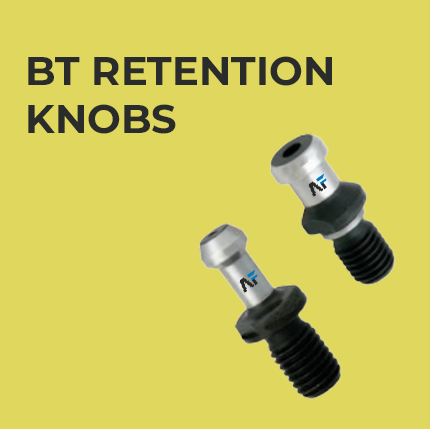
Also known as a retention knob, the pull stud connects the tool holder to the machine spindle’s drawbar, forming the foundation of the clamping system. A weak or incorrect pull stud can result in tool ejection, spindle damage, and dangerous crashes.
In this blog, we’ll walk you through everything you need to know about selecting the right pull stud and why Accu-Fix Precision Tools is the trusted choice for thousands of machinists and OEMs.
What Is a Pull Stud?
A pull stud is a threaded component mounted on the back end of a CNC tool holder. It allows the machine’s drawbar to “grab” the tool holder and pull it tightly into the spindle taper, ensuring secure clamping during machining.
Despite its small size, the pull stud handles:
-
Thousands of Newtons of force
-
Constant tension from the drawbar
-
Intense vibration and heat during operation
The wrong pull stud—or even a slightly worn one—can lead to catastrophic machine failures. That’s why selecting the correct pull stud isn't optional—it's mission-critical.
CNC Safety Starts Here – Shop Quality Pull Studs Today!

Let’s break down the essential criteria that help you select the perfect pull stud for your machine:
1. Machine Taper Type (BT, CAT, HSK, ISO)
Each CNC spindle uses a specific taper standard. Your pull stud must match the tool holder type (e.g., BT30, CAT40, ISO40, HSK63).
|
Taper Type |
Common Use Case |
|
BT |
Asian & European machines |
|
CAT |
North American VMCs & HMCs |
|
HSK |
High-speed precision applications |
|
ISO |
Versatile industrial applications |
Always check your machine manual for compatible tapers before purchasing pull studs.
2. Thread Size, Pitch, and Length
A thread mismatch can lead to:
-
Improper tightening
-
Stud breakage under load
-
Incomplete drawbar engagement
Accu-Fix pull studs come with clearly labeled thread specs and are machined to industry-standard tolerances (e.g., M12x1.75, 5/8"-11 UNC).
Tip: Always verify thread type (metric vs. imperial) and depth before installation.
3. Head Geometry & Retention Style
Different machines and drawbar systems require specific head shapes:
-
Shouldered heads (for positive locking)
-
Flat or round heads (for specific drawbar jaws)
Using the wrong head style can cause the drawbar to slip or fail to engage, leading to lost accuracy or even a dropped tool.
At Accu-Fix, we manufacture multiple head profiles to match OEM requirements for popular CNC brands.
4. Material Strength & Heat Treatment
A pull stud undergoes extreme tension and impact forces during tool changes and operation. Low-grade or soft materials will deform, crack, or fail under load.
That's why Accu-Fix pull studs are:
-
Made from case-hardened alloy steel (e.g., 8620, 4140)
-
Heat-treated for surface hardness (HRC 52-58)
-
Machined for tensile strength over 1,300 MPa
Pro Tip: Never trust unmarked or generic studs that don’t list material specs.
5. Compliance with Global Standards (DIN / ISO / JIS)
Reputable CNC machine brands follow standards like:
-
DIN 69872 (Germany)
-
ISO 7388 (International)
-
JIS B6339 (Japan)
Using non-standard pull studs may void warranties or lead to compatibility issues. Accu-Fix ensures every pull stud is manufactured as per international machining standards and fully traceable for quality audits.
Don’t Risk a Spindle Crash – Use Verified Pull Studs from Accu-Fix!

Even experienced machinists can make critical errors when handling pull studs. Here are some costly mistakes and how to avoid them:
Using Worn-Out Studs
Over time, pull studs can wear at the threads or retention face. This weakens the clamping force and increases the risk of tool pullout.
Solution: Regularly inspect for wear, cracks, or rounding and replace after every 2-3 years of use, depending on workload.
Over-Tightening Without a Torque Wrench
Manual over-tightening stresses threads and causes distortion or cracking.
Solution: Use a calibrated torque wrench set to OEM specifications (e.g., 50–80 Nm for BT40 studs).
Poor Maintenance and Dirty Threads
Oil, chips, or rust can disrupt engagement and retention force.
Solution: Keep studs clean, dry, and lightly oiled with anti-corrosion agents if stored.
Swapping Pull Studs Between Machines
Even two BT40 machines might use different pull stud configurations depending on brand and drawbar.
Solution: Never interchange studs between machines unless confirmed to match thread, length, and head geometry.

At Accu-Fix Precision Tools, we take pull stud manufacturing seriously, because your machine’s safety depends on it.
Here’s what makes our studs the first choice for professionals:
Premium Alloy Steel Construction
We use only certified, traceable materials with hardness ratings optimized for both durability and elasticity.
Micron-Level Machining
Each pull stud is CNC-ground to ensure consistent engagement and long-term repeatability.
Corrosion-Resistant Finishes
Our studs come with black oxide or zinc coatings to resist coolant exposure, rust, and wear.
Taper-Wide Compatibility
We support BT30 / BT40 / BT50, CAT40 / CAT50, ISO, and HSK standards across hundreds of machine brands.
Quality Inspected & Tested
Every pull stud undergoes:
-
Thread verification
-
Head fit inspection
-
Random tensile tests
-
Material traceability
Trusted by OEMs, tool rooms, and high-precision job shops worldwide.
Not Sure Which Pull Stud Fits Your Machine? Ask Our Experts!
Final Thoughts: Small Component, Huge Responsibility
Your CNC spindle relies on the pull stud to keep the tool holder—and your entire operation—running safely and smoothly. Choosing a cheap or incorrect pull stud puts your machine, your workpieces, and your team at risk.
Don’t compromise.
Invest in Accu-Fix pull studs for performance you can trust, batch after batch, run after run.
Ready to Make the Right Fit?
Browse Our Pull Studs by Taper and Thread:
Shop Now on AccuFixTools.com
Need help selecting the right pull stud?
Contact our technical team: sales@accufixtools.com
Custom solutions available for OEMs & tool rooms!
Learn how to select the right CNC pull stud for precision, safety, and compatibility. Avoid crashes—trust Accu-Fix for retention knobs that fit and last.
Related Products


Heavy-Duty Pull Studs at Special Prices!
Accu-Fix Pull Studs Built to Last.
NEW30OFF
Grab Yours Now!
Table of Content
- Introduction
- What Is a Pull Stud?
- 1. Machine Taper Type (BT
- CAT
- HSK
- ISO)
- 2. Thread Size
- Pitch
- and Length
- 3. Head Geometry & Retention Style
- 4. Material Strength & Heat Treatment
- 5. Compliance with Global Standards (DIN / ISO / JIS)
- Using Worn-Out Studs
- Over-Tightening Without a Torque Wrench
- Poor Maintenance and Dirty Threads
- Swapping Pull Studs Between Machines
- Here’s what makes our studs the first choice for professionals
- Final Thoughts
Why choose us?
Accu-Fix Precision Tools is an ISO-certified manufacturer and exporter in India delivering high-performance tools for industries like automotive, aerospace, and woodworking.
We offer a wide range of precision-engineered products like Collets, Tool Holders, Turret Sleeves, Jaws, Pull Studs, and Spanners.
- Premium materials & precision
- Trusted across industries
- ISO-certified quality
- Dedicated customer support
We deliver more than tools — we deliver reliability you can trust.
Related Products
Related Blogs

Why Taps Break in CNC Machines Even When Speed and...

Top-Rated CNC Tooling Suppliers for Precision Milling: What to Look...

CNC Machine Tools: Types, Applications & How to Choose the...

Why Surface Finish Matters in Precision Manufacturing

How to Choose the Right Collet Nut for Your CNC...