- No products in the cart.
























 FREE SHIPPING
Top Benefits of Using Revolving Live Centers in CNC Turning Operations


20
Feb
Introduction
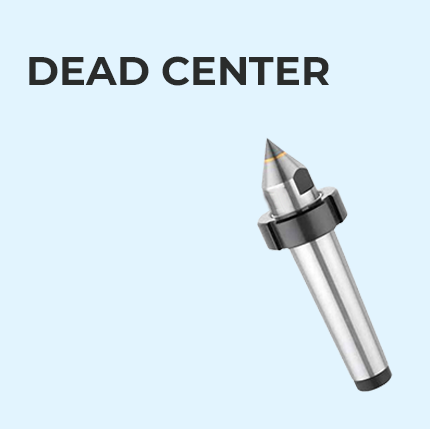
In modern CNC turning operations, precision, speed, and tool reliability are the three pillars of success. Among the many critical components in machining, the revolving live center plays a vital role in ensuring accuracy, stability, and extended tool life. Unlike a dead center, which remains stationary, a revolving live center rotates with the workpiece, minimizing friction, heat, and wear.
For industries such as aerospace, automotive, medical, and heavy engineering, investing in high-quality revolving live centers is no longer optional - it’s essential for maintaining competitive production standards, and buying from a reputable CNC revolving live centers manufacturer is a must for perfect machining.
This article explores the top benefits of using revolving live centers in CNC turning operations, along with practical insights for manufacturers aiming to improve machining efficiency.
What is a Revolving Live Center?
A revolving live center is a tool holding accessory used in CNC lathes, grinders, and turning centers to support long or heavy workpieces at the non-driven end. It consists of:
-
Hardened steel point – contacts and supports the workpiece.
-
High-precision bearings – allow the center to rotate with the workpiece.
-
Tapered shank – fits securely into the machine tailstock or turret.
By rotating in sync with the workpiece, live centers drastically reduce friction, heat generation, and deformation, resulting in smoother and more accurate machining.
Key Benefits of Using Revolving Live Centers
1. Enhanced Workpiece Support & Stability
Revolving live centers from a trusted CNC live centers manufacturer in India, provide rigid and stable support for long or slender workpieces that might otherwise bend or vibrate during machining. This stability allows CNC machines to operate at higher cutting speeds without compromising dimensional accuracy.
2. Improved Accuracy & Surface Finish
Because the live center rotates with the workpiece, tool deflection and surface irregularities are minimized. Manufacturers often achieve tighter tolerances and superior surface finishes, which are critical for aerospace and medical components.
3. High-Speed Machining Compatibility
Modern CNC turning often requires speeds exceeding 5,000 RPM. Revolving live centers are designed with precision bearings that handle high-speed operations without excessive heat or wear. This makes them indispensable in high-production CNC workshops.
4. Reduced Wear & Longer Tool Life
Dead centers create constant friction, leading to rapid wear of both the tool and the workpiece. Revolving live centers eliminate this issue by rotating with the part, thereby extending tool life and reducing downtime for tool changes.
5. Versatility Across Workpiece Sizes & Materials
From tiny medical implants to heavy-duty automotive shafts, live centers come in a wide variety of sizes, load capacities, and designs. Whether the job involves steel, aluminum, titanium, or composites, a suitable live center from a reliable revolving live centers manufacturer in India ensures precision and reliability.
6. Better Load Distribution & Vibration Control
Vibrations are the enemy of precision machining. Live centers distribute loads evenly and absorb cutting vibrations, resulting in smoother operations and reduced risk of chatter marks.
7. Energy Efficiency & Cost Savings
With reduced friction and wear, CNC machines operate more efficiently. This leads to lower energy consumption, less scrap, and reduced overall production costs, making live centers a cost-effective investment.
Industries That Rely on Revolving Live Centers
-
Aerospace: High-precision turbine shafts, landing gear components.
-
Automotive: Axles, transmission shafts, crankshafts.
-
Medical: Surgical instruments, orthopedic implants.
-
Oil & Gas: Heavy-duty drill bits, pump shafts.
-
General Engineering: Rollers, spindles, custom components.
In all these industries, accuracy and repeatability are paramount - and live centers deliver both.
Revolving Live Centers vs. Dead Centers
Feature |
Dead Center |
Revolving Live Center |
|
Movement |
Stationary |
Rotates with the workpiece |
|
Friction |
High |
Very Low |
|
Heat Generation |
High |
Minimal |
|
Tool Life |
Shorter |
Longer |
|
Suitability |
Low-speed machining |
High-speed, precision machining |
Clearly, revolving live centers are the preferred choice for modern CNC turning due to their performance and durability.
Maintenance Tips for Maximum Tool Life
To unlock the full benefits of a revolving live center, follow these best practices:
-
Clean after every use to remove chips and coolant.
-
Apply proper lubrication to bearings.
-
Inspect for runout and bearing wear.
-
Store in a clean, dry environment when not in use.
Proper maintenance ensures consistent accuracy and extended service life.

Choosing the Right CNC Revolving Live Center
When selecting a live center, consider:
-
Workpiece size & weight
-
Required RPM (standard vs. high-speed centers)
-
Load capacity
-
Type of machining operation (turning, grinding, drilling)
-
Coolant compatibility
Manufacturers who match the right tool to the right application gain the maximum return on investment.
Conclusion
The revolving live center may seem like a small component in CNC machining, but its impact is massive. From improving accuracy and extending tool life to enabling high-speed operations, live centers are indispensable for modern turning shops.
By choosing the right live center and maintaining it properly, manufacturers can achieve higher productivity, lower costs, and superior part quality.
Upgrade your CNC operations with Accu-fix Precision tools’ high-performance revolving live centers today.
Explore Our CNC Live Centers.
Related Products:


Table of Content
Why choose us?
Accu-Fix Precision Tools is an ISO-certified manufacturer and exporter in India delivering high-performance tools for industries like automotive, aerospace, and woodworking.
We offer a wide range of precision-engineered products like Collets, Tool Holders, Turret Sleeves, Jaws, Pull Studs, and Spanners.
- Premium materials & precision
- Trusted across industries
- ISO-certified quality
- Dedicated customer support
We deliver more than tools — we deliver reliability you can trust.
Related Products
Related Blogs

Top-Rated CNC Tooling Suppliers for Precision Milling: What to Look...

CNC Machine Tools: Types, Applications & How to Choose the...

How Modern CNC Tools Are Improving Manufacturing in 2026

Top Mistakes to Avoid While Using CNC Revolving Live Centers

How to Choose the Right Collet Nut for Your CNC...